
How it works
Four plain states. No scores.
Every AED is in one of four states, read from its inspection records. There are no percentages and no grades, so a gap is not averaged away.
What each state means.
The evidence on file says it is ready: it was inspected, and nothing recorded is expired or failed.
The records show no failure, but something needs attention soon, such as pads close to their expiry date or a battery recorded as low.
A problem is on record, such as an expired pad or a failed battery.
There is no evidence, or it is too old to rely on. We do not guess, and unknown is never shown as ready.
These states are readings of your records. They are not a test of the device itself.
From a walk-by to a record you can show.
Inspect
Inspectors can be assigned to each AED, and the next inspection date is shown once an inspection is on record. At the device, they record what they see, including the pads and the battery.
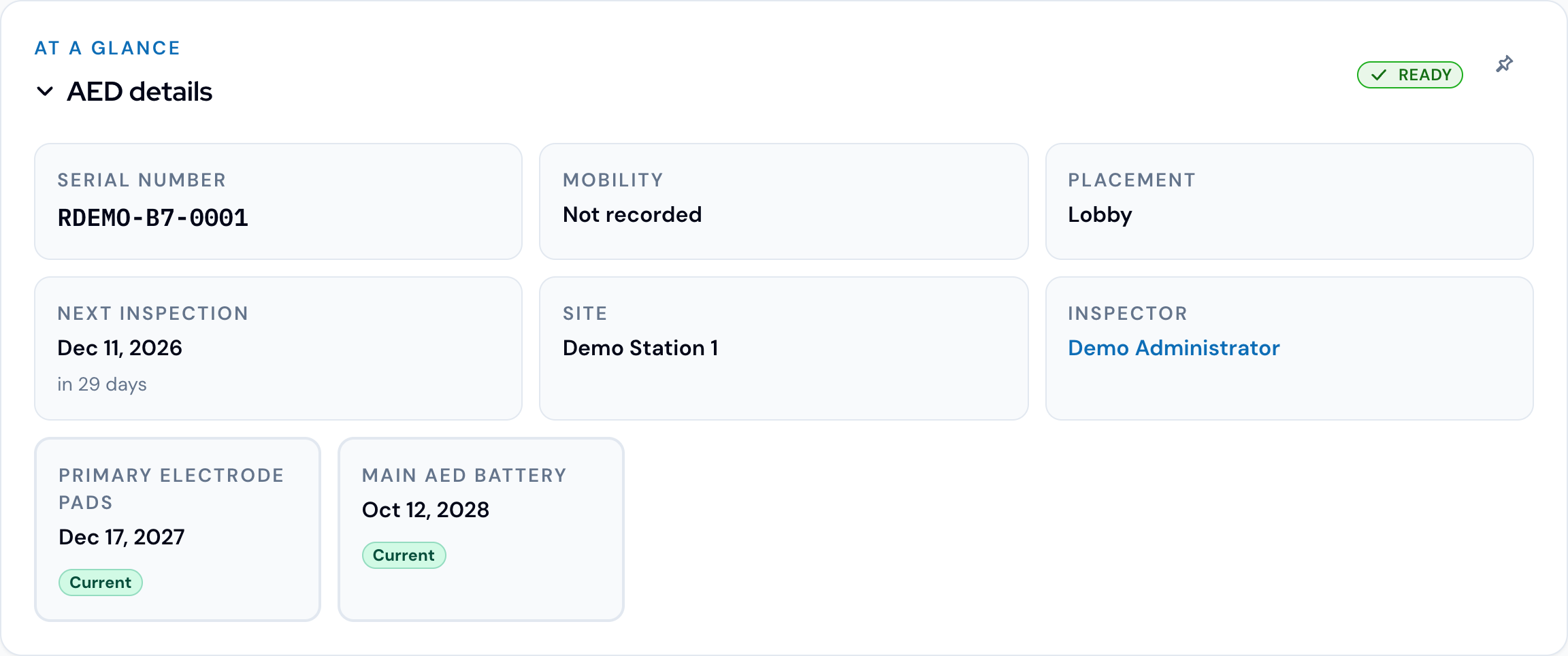
Record
Each inspection stays with the AED, with who did it and when. Pads and batteries are tracked by their expiry dates, so each expiry date is on the page.
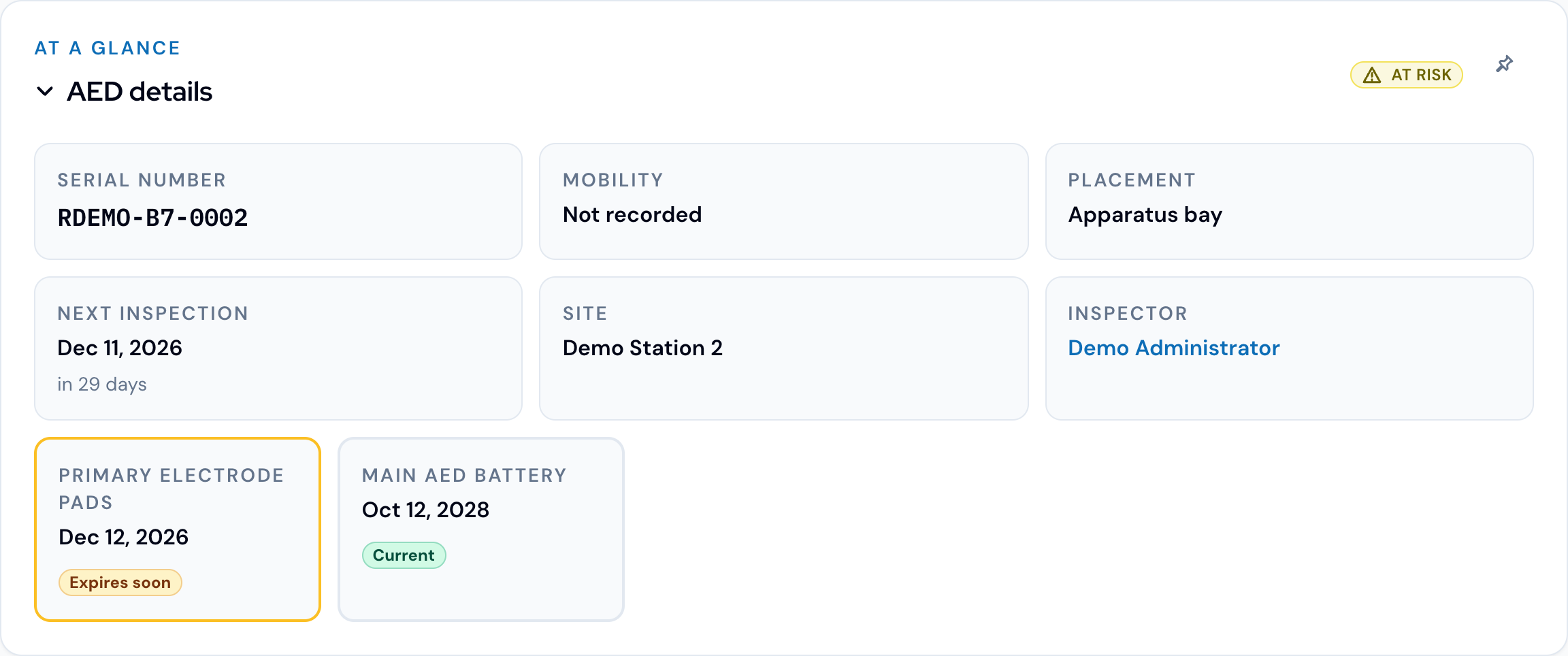
See what is missing
With no inspection on record, an AED shows UNKNOWN, not READY. Your fleet view counts every state, so the gaps are counted in plain view.
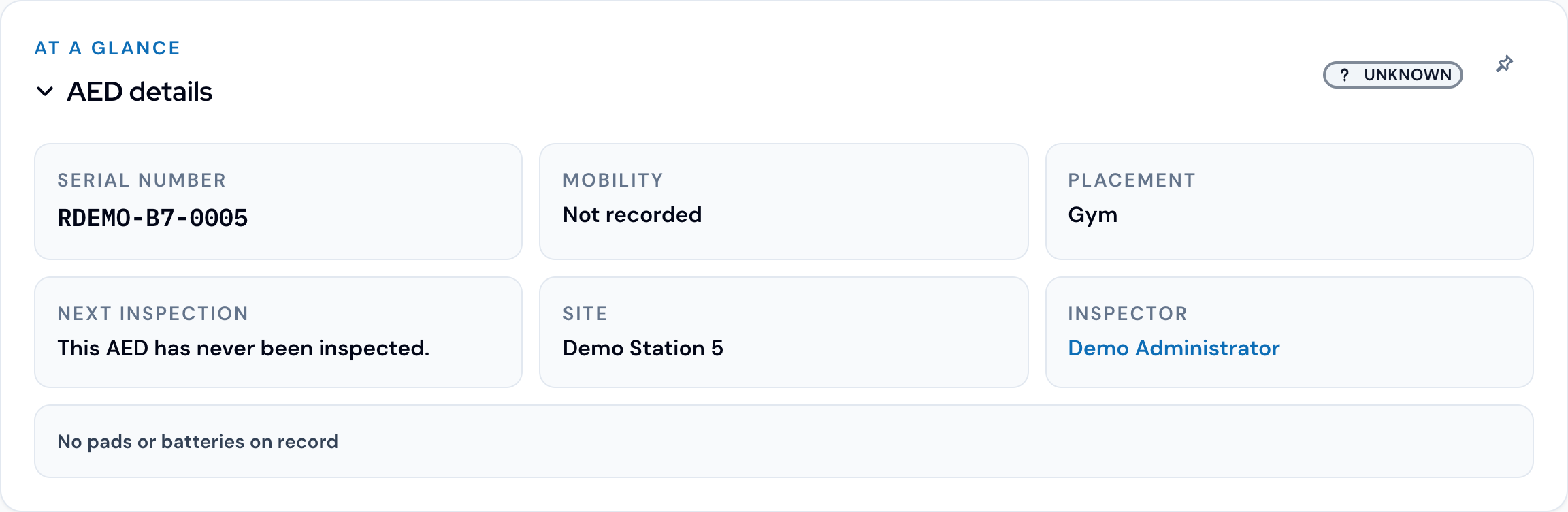
Screens from the product with made-up demonstration data. No customer information is shown.
Plain about the limits
What it does, and what it does not.
AED CheckTrac records what was inspected and what evidence exists. It relies on people doing and recording the inspections. It does not test an AED, it does not guarantee that a device will work, it does not state that a program is compliant, and it does not give clinical, legal or compliance advice.